

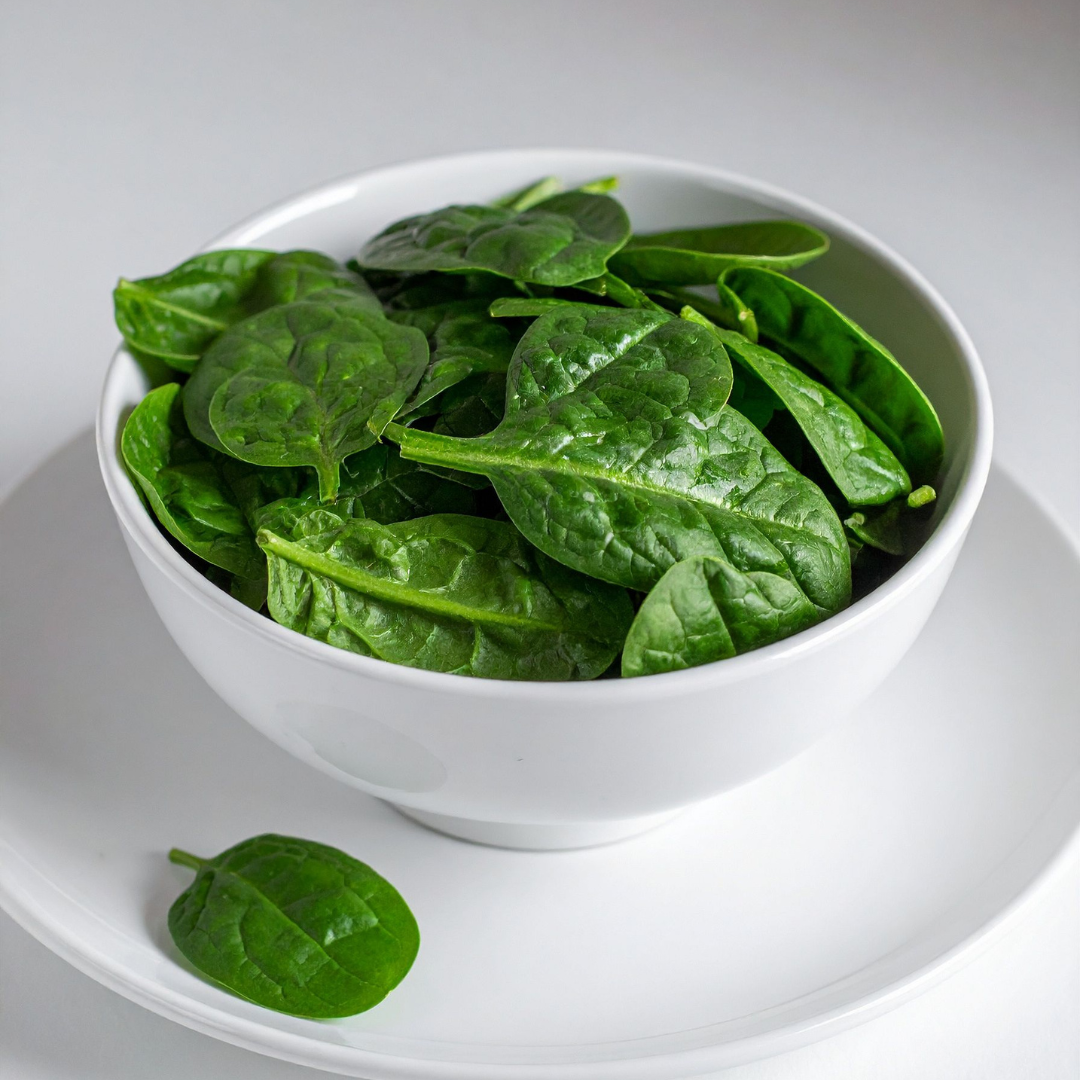
Spinach: The Quiet Powerhouse Behind Some of Our Favorite Dishes
“It doesn’t announce itself. It doesn’t need to. Spinach is the ingredient that shows up, does the work, and makes everything around it better.”
What Makes an Ingredient Worth Talking About
Not every ingredient earns a spotlight by being dramatic. Some earn it by being indispensable — by quietly appearing in dish after dish, culture after culture, century after century, and always pulling its weight.
Spinach is that ingredient. It's not exotic, it's not trendy, and it doesn't need to be. What it is, consistently and without compromise, is one of the most nutritionally dense, culinarily adaptable, and genuinely useful greens in any kitchen. When Alab SF builds a dish around spinach — or layers it into a bowl, a sauce, or a base — it's not filler. It's a deliberate choice made by people who think carefully about what goes on your plate.
Origins and Culinary Use
Spinach originated in ancient Persia — what is modern-day Iran — and was cultivated there as far back as the 7th century. From Persia, it traveled east to China by the Tang Dynasty, where it was referred to as the "Persian vegetable," and west through the Arab world into Spain by the 11th century. By the Renaissance, it had taken root across Europe, and by the 16th century it had become a staple in French cooking — reportedly a favorite of Catherine de Medici, who is said to have brought it from Florence to France and insisted it appear at nearly every meal. (Dishes prepared on a bed of spinach are still called "à la Florentine" in French cuisine, a nod to that history.)
Spinach crossed the Atlantic with European settlers and became a fixture in American cooking over centuries, most famously embedded in popular culture through Popeye — though the connection to raw strength was more marketing than science. The real story is more nuanced and considerably more interesting.
In the kitchen, spinach behaves differently depending on how you treat it. Raw, it's mild and slightly earthy — a clean, unobtrusive base for salads or bowls that lets other ingredients lead. Wilted or sautéed in a hot pan with a little olive oil and garlic, it collapses quickly and intensifies in flavor, becoming something richer and more savory. Blended into sauces or stirred into soups and curries, it disappears visually but adds depth, color, and nutrition without altering the flavor profile of a dish. Braised low and slow, it absorbs whatever surrounds it and becomes silky, almost buttery in texture.
That range — from raw freshness to deep-cooked richness — is what makes spinach so valuable to a chef building a diverse weekly menu. It works in nearly every culinary tradition: Indian palak paneer, Italian pasta, French gratins, Middle Eastern fatayer, Japanese goma-ae, American sautés. It belongs everywhere because it knows how to adapt.
Health and Nutritional Benefits
Here's where the story gets genuinely compelling — and where spinach earns its reputation not just in the kitchen, but in the body.
It's extraordinarily nutrient-dense for its calorie count. A two-cup serving of raw spinach contains fewer than 15 calories, yet delivers meaningful amounts of Vitamins K, A, C, folate, iron, calcium, potassium, and magnesium. Cooked spinach concentrates those nutrients further — a cup of cooked spinach provides nearly 6mg of iron, roughly a third of the daily recommended intake for adults.
Vitamin K is worth highlighting specifically. Spinach is one of the richest dietary sources of Vitamin K1, a nutrient essential for healthy blood clotting and — increasingly understood by researchers — bone density and cardiovascular health. People who eat leafy greens consistently tend to show better bone mineral density over time, and Vitamin K is a significant reason why.
Folate, also abundant in spinach, is a B vitamin that supports cell production and DNA repair. It's especially important during pregnancy, but folate plays a role throughout life in reducing homocysteine levels in the blood — elevated homocysteine is associated with increased cardiovascular risk. Eating folate-rich foods consistently is one of the more straightforward ways to support heart health through diet alone.
The antioxidant profile in spinach is substantial. It contains lutein and zeaxanthin — two carotenoids that accumulate in the retina and are strongly associated with reduced risk of age-related macular degeneration and cataracts. It also contains kaempferol, a flavonoid that has been studied for its potential role in reducing cancer cell growth in early research. And its beta-carotene content (the same compound found in carrots and sweet potatoes) supports immune function and skin repair.
For digestive health, spinach offers both fiber and thylakoids — compounds found in the leaf membranes that have been shown in studies to slow digestion and reduce cravings by promoting satiety hormones. In plain terms: spinach can help you feel full without adding significant calories, which makes it a genuinely smart choice for anyone managing weight, blood sugar, or simply trying to eat in a way that keeps energy steady.
One practical note worth mentioning: spinach contains oxalates, which can bind to certain minerals like calcium and reduce their absorption. For most people eating a varied diet, this is a non-issue. But lightly cooking or wilting spinach reduces oxalate content noticeably, which is one more reason the sautéed preparation is often preferred both for flavor and for maximizing nutritional benefit.
Why Spinach Earns Its Place at Alab SF's Table
The meals Alab SF puts together aren't built around what photographs well or what sounds good in a description. They're built around what actually works — what nourishes, what satisfies, and what holds up across a week of real eating by real people.
Spinach fits that standard consistently. It's one of the rare ingredients that earns its place on a plate for the person who cares primarily about flavor, the person tracking their iron intake, the parent looking for something their kid will actually eat, and the fitness-focused professional who wants clean carbohydrates and micronutrients in every meal. It doesn't require compromise from any of those people.
When spinach appears in an Alab SF dish — whether it's a base, a sauce, a component of a grain bowl, or folded into something more complex — it's there because the chef put it there for a reason. Every weekly menu is built with that level of intentionality, using organic ingredients and techniques that preserve both flavor and nutrition from kitchen to your door.
That's the difference between a meal service that delivers food and one that delivers meals worth eating.
A Closing Note
Good ingredients deserve good treatment, and good food deserves to reach people who'll actually enjoy it. That's what Alab SF is built around — honest cooking, thoughtful sourcing, and the kind of meals that make a real difference in how your week feels.
We're looking forward to having you at the table. Whether you're exploring Alab SF for the first time or you've been part of the community for a while, there's always something new on the menu — and always something made with this level of care behind it.
Come be part of what we're building. You deserve to eat well, without it costing you your evening.
Alab SF delivers fresh, chef-crafted organic meals weekly across the Bay Area. Gluten-free, dairy-free, and made for real life. Explore this week's menu → Alabsf.net.
