

Kimchi: The Fermented Side Dish That Does the Work of Five Ingredients
Ancient Korean preservation technique, modern gut-health staple, and one of the most flavor-dense ingredients in any clean kitchen. This is the kimchi deep-dive.
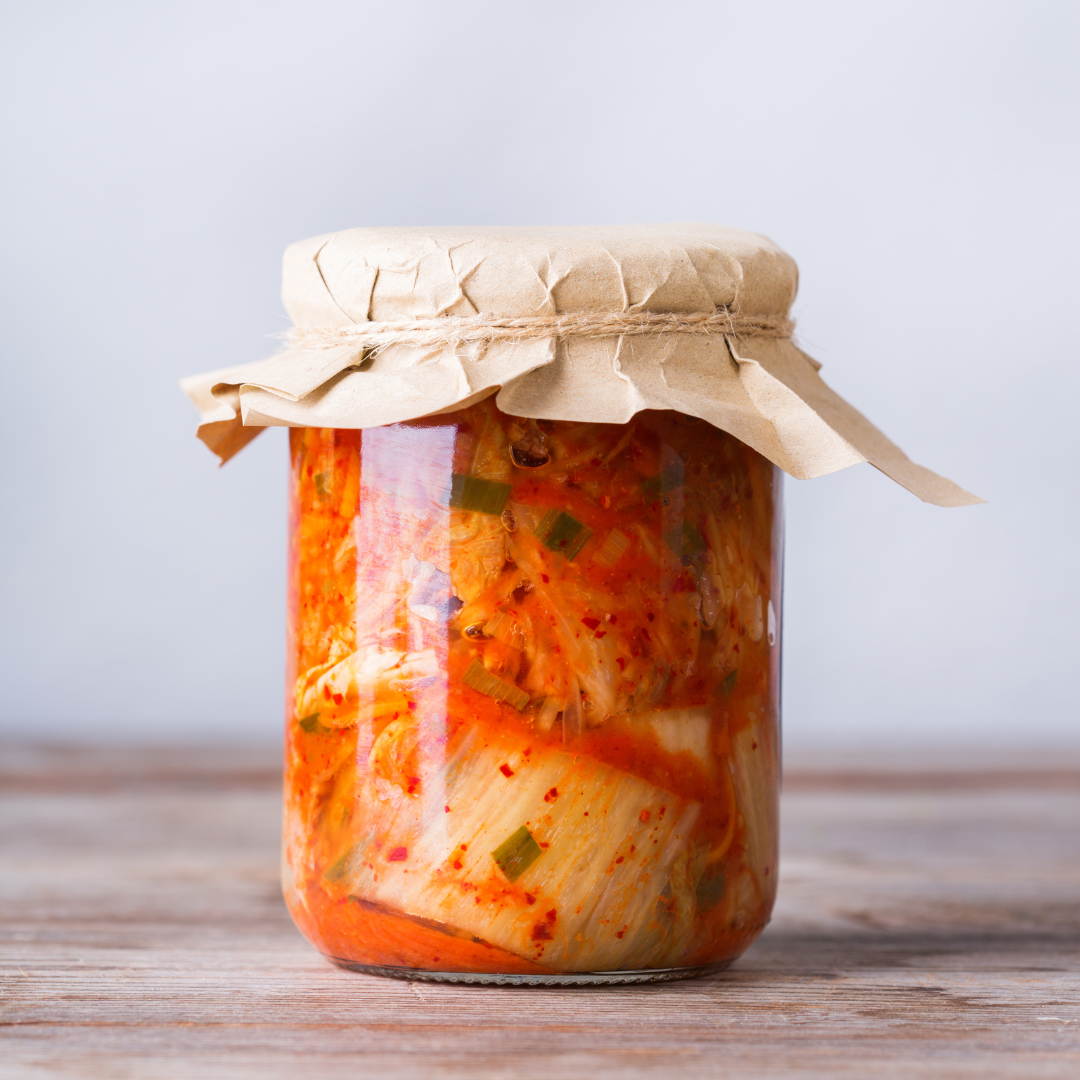
There’s a reason kimchi has moved from Korean grandmother’s crocks to every Bay Area restaurant worth eating at. It isn’t trend-following — it’s recognition. Kimchi is spicy, sour, funky, and deeply savory all at once, built through a fermentation process that dates back over a thousand years and happens to produce some of the most gut-friendly bacteria known in food science.
It’s also, by its traditional nature, a whole-food ingredient made from vegetables, salt, garlic, ginger, and chili — nothing artificial, nothing synthetic. For a clean-eating kitchen, that profile is almost too good to be true. But kimchi earns every bit of its reputation.
A Thousand Years of Fermentation, One Jar at a Time
Kimchi’s origins trace back to the Three Kingdoms period of Korea (roughly 37 BCE – 668 CE), when vegetables were salted and fermented as a method of preservation through harsh winters. Early kimchi was simple — just salted greens. The chili pepper that now defines it didn’t arrive until the 16th century, introduced through trade routes after European contact with the Americas. The Koreans adopted it so thoroughly that it’s now inseparable from the dish’s identity.
“Kimchi is not one thing. There are estimated to be over 200 regional varieties across Korea — each household, each region, each season producing something slightly different from the same essential tradition.”
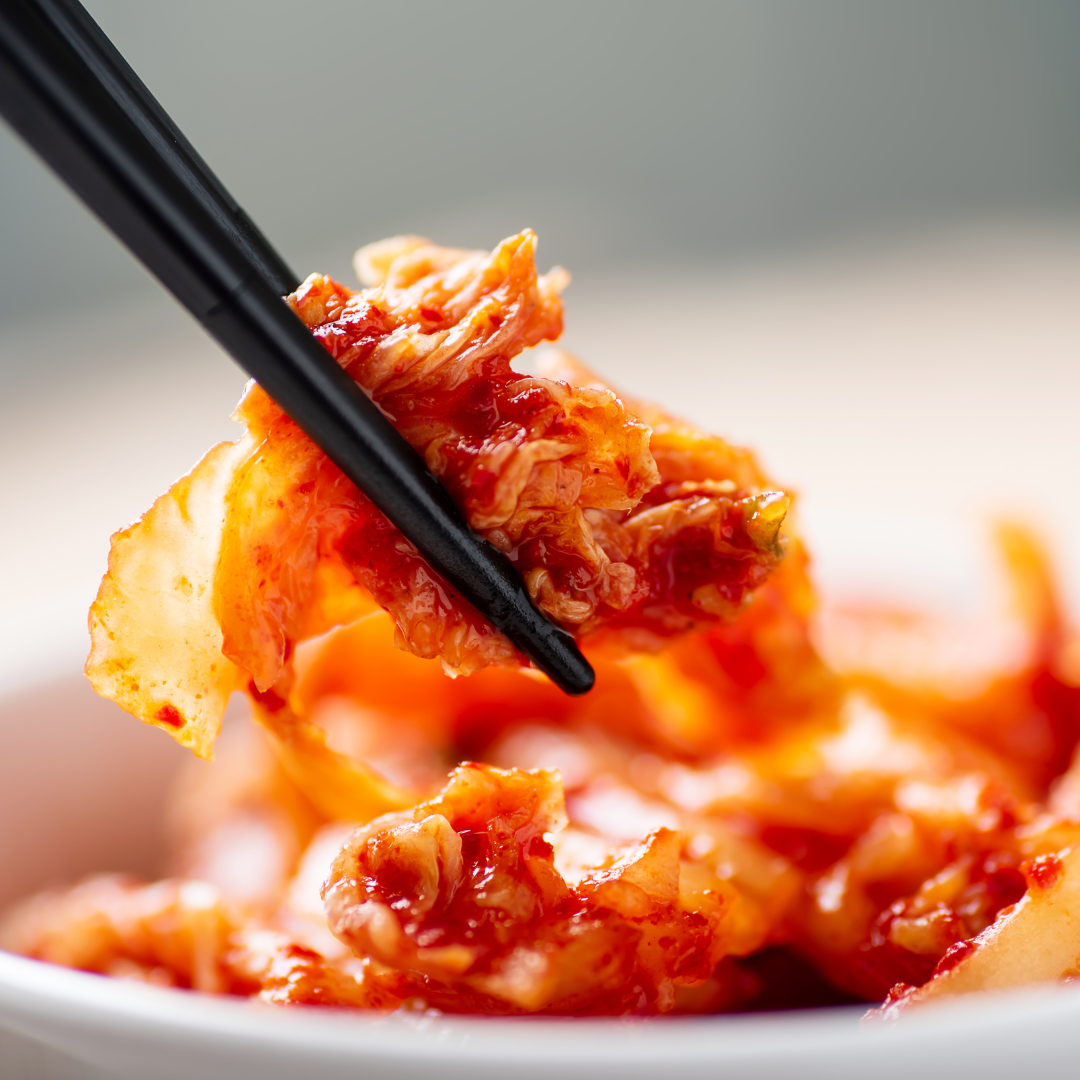
The most familiar version — baechu-kimchi, made from napa cabbage — is what most people outside Korea know. But the kimchi family includes radish (kkakdugi), cucumber (oi sobagi), green onion (pa-kimchi), and dozens of others. What unites them is the fermentation process: vegetables are salted to draw out moisture, then coated in a paste of garlic, ginger, chili flakes (gochugaru), and often fish sauce or salted shrimp, then left to ferment at room temperature before being refrigerated to slow the process.
In Korean cooking, kimchi is both a side dish (banchan) and a cooking ingredient — folded into rice, tucked into dumplings, simmered into jjigae (stew), and fried with pork and tofu. In contemporary kitchens far beyond Korea, it shows up in grain bowls, tacos, burgers, scrambled eggs, and anywhere a dish needs acidity, heat, and depth without reaching for a sauce bottle.
What to look for on the label
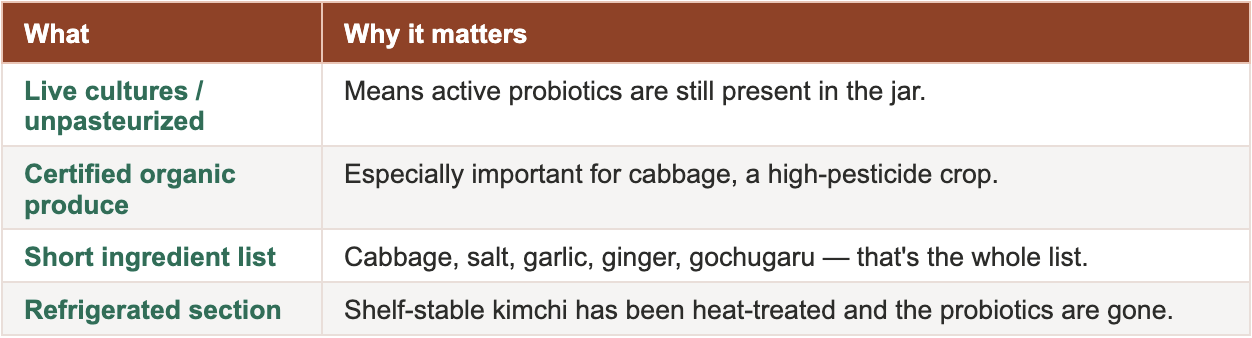
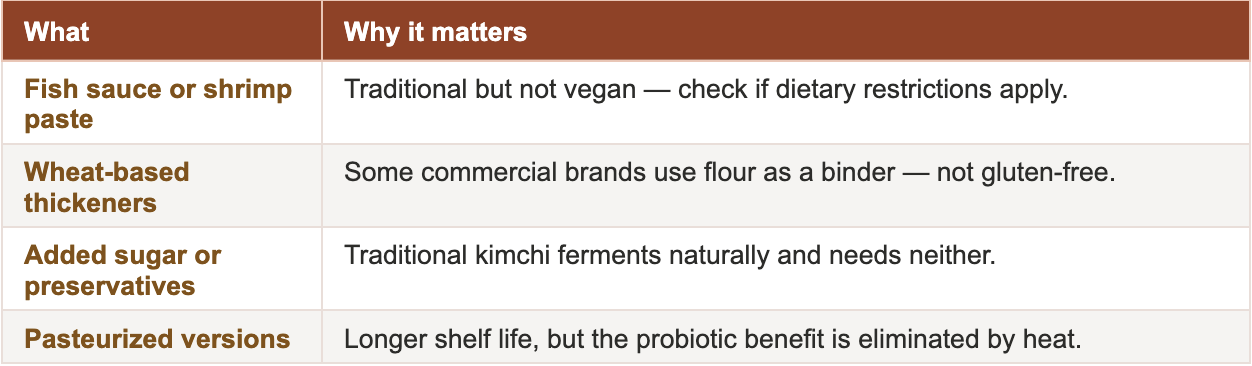
Watch out for
The Gut Health Case — and Everything Else
Kimchi is frequently cited as one of the world’s healthiest foods, and unlike a lot of that type of claim, the science holds up reasonably well. The fermentation process produces Lactobacillus bacteria — the same family of probiotics found in yogurt — which colonize in the gut and support a range of digestive and immune functions. A 2021 Stanford study found that a diet high in fermented foods, including kimchi, measurably increased microbiome diversity and reduced inflammatory markers.
But fermentation is just the beginning of what kimchi brings nutritionally:
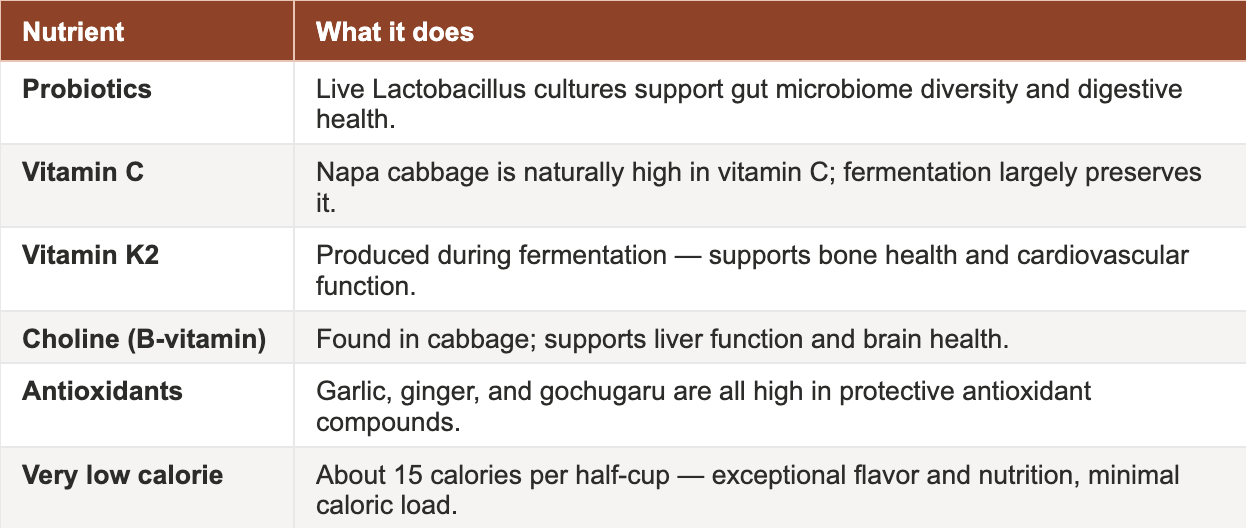
For the gluten-free and dairy-free community specifically, kimchi is a rare find: a fermented food with probiotic benefits that doesn’t depend on dairy as a base. Most probiotic-rich foods are yogurt, kefir, or cheese. Kimchi offers the same class of benefit in a completely dairy-free, naturally gluten-free form — as long as you source the right version.
The gochugaru (Korean chili flakes) also contributes capsaicin, which has a well-documented effect on metabolism and thermogenesis. For fitness and wellness-focused eaters, that’s a meaningful bonus from what amounts to a condiment.
Why Kimchi Earns a Place in Every Clean Kitchen
In our kitchen, kimchi does something that few single ingredients can: it simultaneously adds heat, acidity, umami, and gut-friendly bacteria to a dish — four functions that would otherwise require four separate ingredients. For clean, gluten-free, dairy-free cooking, that kind of flavor compression is invaluable.
When we incorporate kimchi into a meal at Alab SF, we’re thinking about it as a building block, not a garnish. A spoonful alongside a grain bowl changes the entire flavor landscape of the dish. Folded into a sauce, it adds fermented depth that would otherwise take hours of slow cooking to develop. And because it’s cold-fermented and not heat-treated in our preparations, the probiotic benefit comes through intact.
We source organic, traditionally made kimchi — unpasteurized, with a clean label and live cultures — because the shortcut version isn’t really kimchi. It’s pickled cabbage. The difference matters both nutritionally and in terms of what it does to a dish.
That insistence on the real thing, across every ingredient we use, is what makes an Alab SF meal something worth coming back to every week.
We’d love to have you at our table.
The Alab SF community is built on the idea that nourishing food should also be the most convenient choice you make all week. We’re looking forward to serving you — with healthy, delicious, chef-crafted meals delivered to your door.
Explore This Week’s Menu → alabsf.net
