

The Blueberry: Small, Underestimated, and Quietly Exceptional
“One of the most researched fruits in the world, and still one of the easiest to love. Here’s why blueberries belong at every table, every age, and every season.”
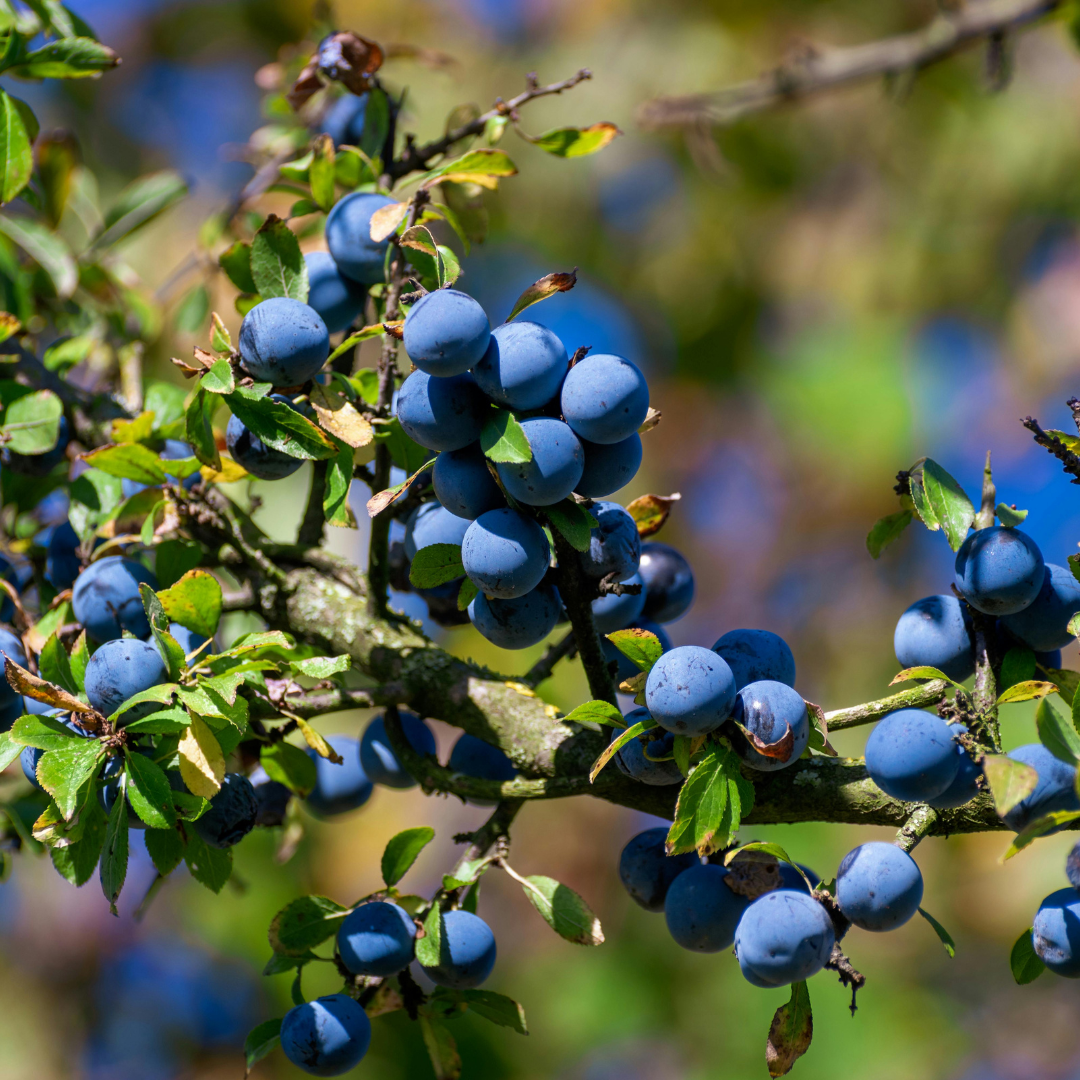
There’s something almost unfair about blueberries. They require no peeling, no pitting, no preparation at all. Kids eat them straight from the container. They survive freezing without losing much of what makes them worth eating. They taste good in breakfast bowls, desserts, sauces, and salads. And somehow, on top of all that convenience, they happen to be one of the most nutrient-dense fruits you can find.
Not every ingredient needs a complicated story. Sometimes the most compelling case is the simplest one: this thing is good for you, it tastes great, and it shows up everywhere you need it.
A North American Original That Went Global
Blueberries are one of the few commercially grown fruits truly native to North America. Indigenous communities across the continent harvested wild blueberries for centuries — eating them fresh, drying them for winter, and incorporating them into pemmican, a nutrient-dense travel food made with dried meat and fat. When European settlers arrived, they quickly adopted the fruit, and by the early 20th century, the first cultivated blueberry crops were being grown in New Jersey.
“Blueberries are one of those rare ingredients with no bad application — they work raw, cooked, frozen, dried, and blended, and they improve nearly every dish they’re added to.”
Today the United States, Canada, and Chile are the world’s largest producers, with wild blueberries (smaller and more intensely flavored) still harvested across the northeast and the Pacific Northwest. In the Bay Area, blueberry season typically runs from late spring through late summer, with local organic farms hitting their peak in June and July — when the berries are at their sweetest and most fragrant.
In the kitchen, their range is remarkable. They caramelize beautifully in a hot pan, thicken naturally into sauces and compotes, hold up in baked goods without becoming mushy, and add a pop of color and brightness to grain bowls and salads that few other ingredients can match.
Fresh vs. frozen: what actually matters
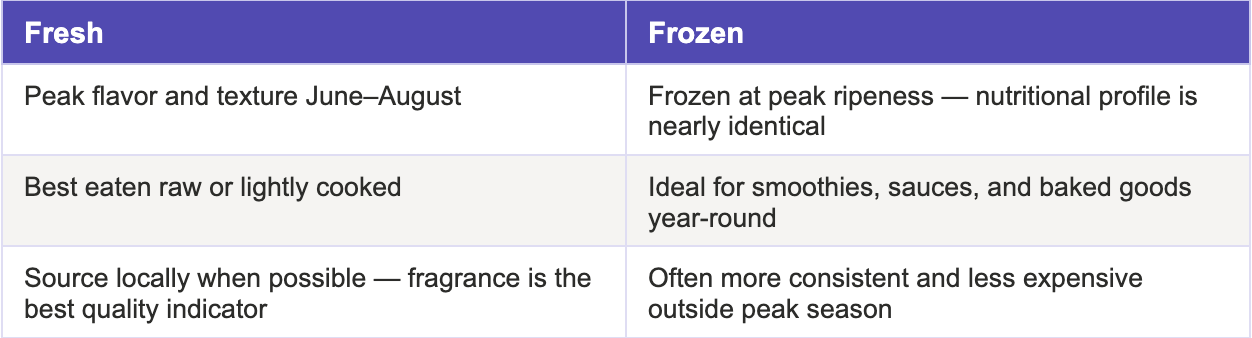
The short answer: don’t let “fresh vs. frozen” be a barrier. Both are genuinely good choices — what matters most is organic sourcing, not the form.
What the Research Actually Shows
Blueberries have been studied more extensively than almost any other fruit, and the findings are consistent: the compounds that give them their deep blue-purple color — anthocyanins — are among the most potent plant antioxidants found in any food. Antioxidants is a word that gets thrown around loosely, so it’s worth being specific: anthocyanins work by neutralizing free radicals, reducing oxidative stress in cells, and modulating inflammatory pathways.
In practical terms, that translates to a body of research linking regular blueberry consumption to measurable improvements in several areas:
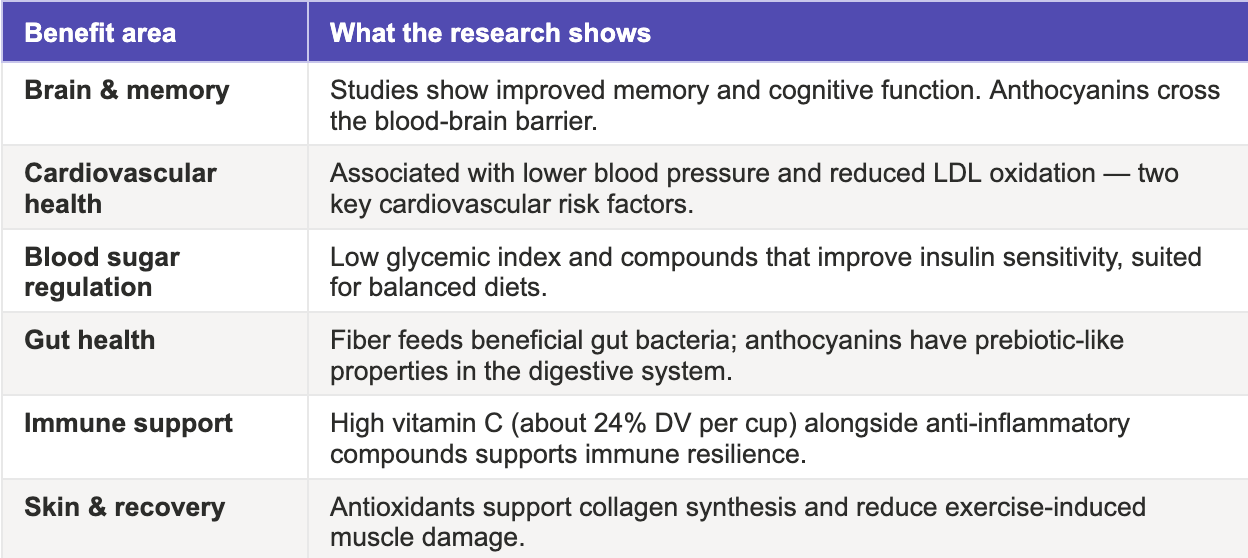
One cup of blueberries delivers roughly 84 calories, 4g of fiber, 24% of your daily vitamin C, and 36% of vitamin K — all at a naturally low glycemic load. For parents feeding kids, that’s a rare combination: something with genuine nutritional value that children will actually eat without negotiation.
Why We Keep Coming Back to This Berry
At Alab SF, blueberries show up in our meals because they solve a problem most clean-eating services struggle with: how do you add natural sweetness, color, and nutritional density to a dish without relying on refined sugars or ingredients that compromise the clean profile?
A small amount of blueberries in a grain bowl or breakfast dish does more than taste good — it adds anthocyanins, fiber, and a brightness that makes a meal feel complete rather than utilitarian. For our gluten-free and dairy-free meals especially, fruit like blueberries carries flavor work that would otherwise fall to ingredients we choose not to use.
We source organic blueberries — fresh in season, frozen when it makes sense — because the organic distinction matters more with berries than most produce. Conventionally grown blueberries consistently appear on lists of high-pesticide fruits. Organic removes that concern entirely, which matters whether you’re feeding yourself after a long week or packing meals for kids.
That’s the kind of quiet, deliberate decision that goes into every ingredient we use. Not always visible, not always obvious — but always there.
We’re looking forward to having you at our table.
The Alab SF community is built around one simple idea: that clean, chef-crafted, organic food should be as easy to eat as it is good for you. We’d love for you to be part of it — and to be served with the healthy, delicious dishes we make each week.
Explore This Week’s Menu → alabsf.net
